
Making Thin-Film Solar Even Greener: An Interview with Conrad Spindler
We interviewed Conrad Spindler, Sustainability Consultant at Green Delta and leader of WP7, dedicated to sustainability and compliance for new applications within Hi-BITS.
In this conversation, Conrad explains why a full environmental assessment matters for thin-film technology, a technology already widely considered green, and how this work feeds into the optimisation of PV modules.
What is the role of a sustainability work package within Hi-BITS?
"In Hi-BITS, we have one work package dedicated to sustainability, because a full environmental assessment isn't only about greenhouse gas emissions," Spindler explains, demystifying the scope of the WP.
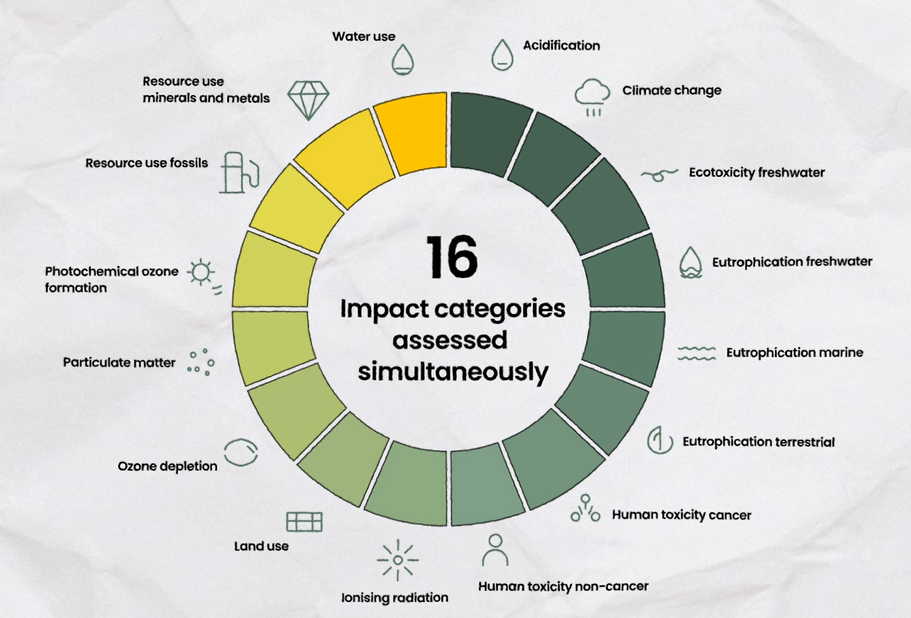
Within Hi-BITS, life-cycle assessment covers 16 impact categories: acidification, climate change, freshwater ecotoxicity, freshwater eutrophication, marine eutrophication, terrestrial eutrophication, human toxicity (cancer), human toxicity (non-cancer), ionising radiation, land use, ozone depletion, particulate matter, photochemical ozone formation, fossil resource use, mineral and metal resource use, and water use.
"Our challenge is to make sure that when we develop new thin-film materials, we don't shift the environmental impacts from one category to another," Spindler adds.
How does sustainability assessment inform the development of Hi-BITS PV modules?
"The environmental impact of these thin-film technologies is not zero. There's no product in this world with zero environmental impact," Spindler notes.
"But when we optimise our PV modules with thin films, we can achieve even lower impacts than silicon modules, because we don't need the thick wafers or the large amount of material that silicon requires. So, even though every PV technology is already very green compared to fossil energies, with thin films, we can get a step greener."